
External Finishes
Render that holds up to Sandbanks salt for 25 years.
Spray-applied monocouche and silicone, plus traditional sand & cement, from a dedicated render team. Specified for the property, applied to the manufacturer’s spec, signed off and warrantied. Builders: whole elevations in days, not weeks.
Get my itemised quoteWhy external render matters
External render does two jobs: it protects the underlying masonry from water ingress, frost and weathering, and it transforms the appearance of a property. Done well, it adds value, improves insulation performance and can last decades without maintenance. Done badly, it cracks, debonds and lets water in behind the surface.
We’ve been installing render systems across Dorset for years. From the exposed seafront properties of Sandbanks and Canford Cliffs, to sheltered estates in Broadstone, Wimborne and Ferndown. Coastal Poole and Christchurch need render that handles salt, wind and driving rain. Inland properties face different challenges. We specify the right system for your situation, prepare the surface properly, and apply it to the manufacturer’s specification. Shortcuts in render always show up eventually.
Most rendering jobs also involve interior work, because the rooms behind the walls still need finishing. We offer full domestic plastering and skimming so you get one team for the entire property. For extensions and new builds, we combine rendering with our drylining and plasterboarding service.
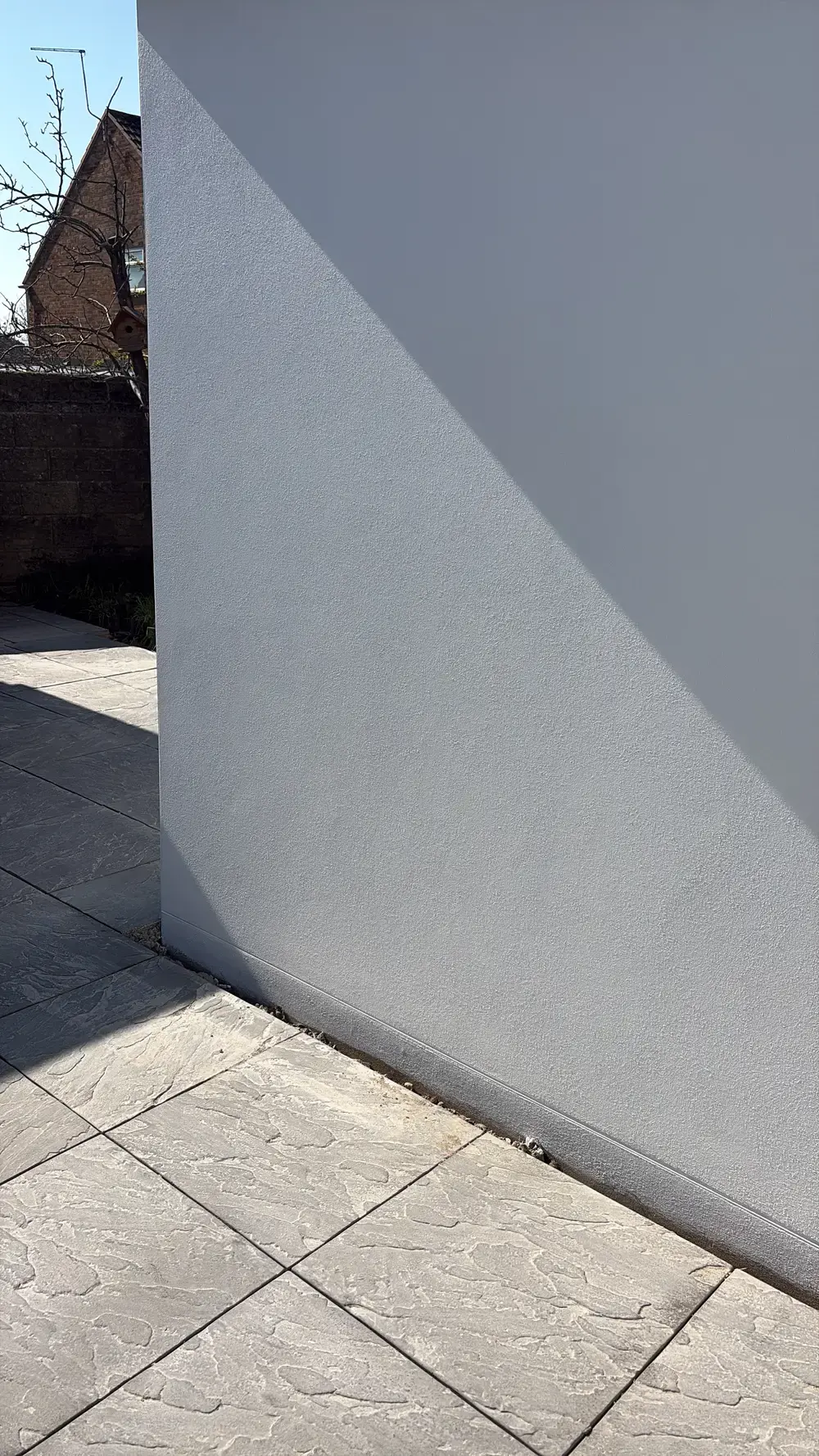
Our render systems
Three systems. Each has distinct advantages, we’ll advise which is right for your property.
Sand & Cement
The traditional choice. A scratch coat and float coat provide a solid, hard-wearing base that can be painted any colour. Good for period properties and solid masonry. Can incorporate pebble-dash, tyrolean or smooth finishes.
Monocouche
A single-coat system applied directly to the masonry, sprayed on with our render pump and ruled off by hand. Coloured through the mix, so no painting required. Fast, low maintenance, available in hundreds of colours. Ideal for modern properties and multi-plot programmes.
Silicone Render
The long-life option. Applied over a base coat or EWI system, silicone render is highly flexible (so it doesn’t crack), water-repellent (not water-trapping), and self-cleaning. 25+ year lifespan with minimal maintenance. Best choice for cavity-wall properties.
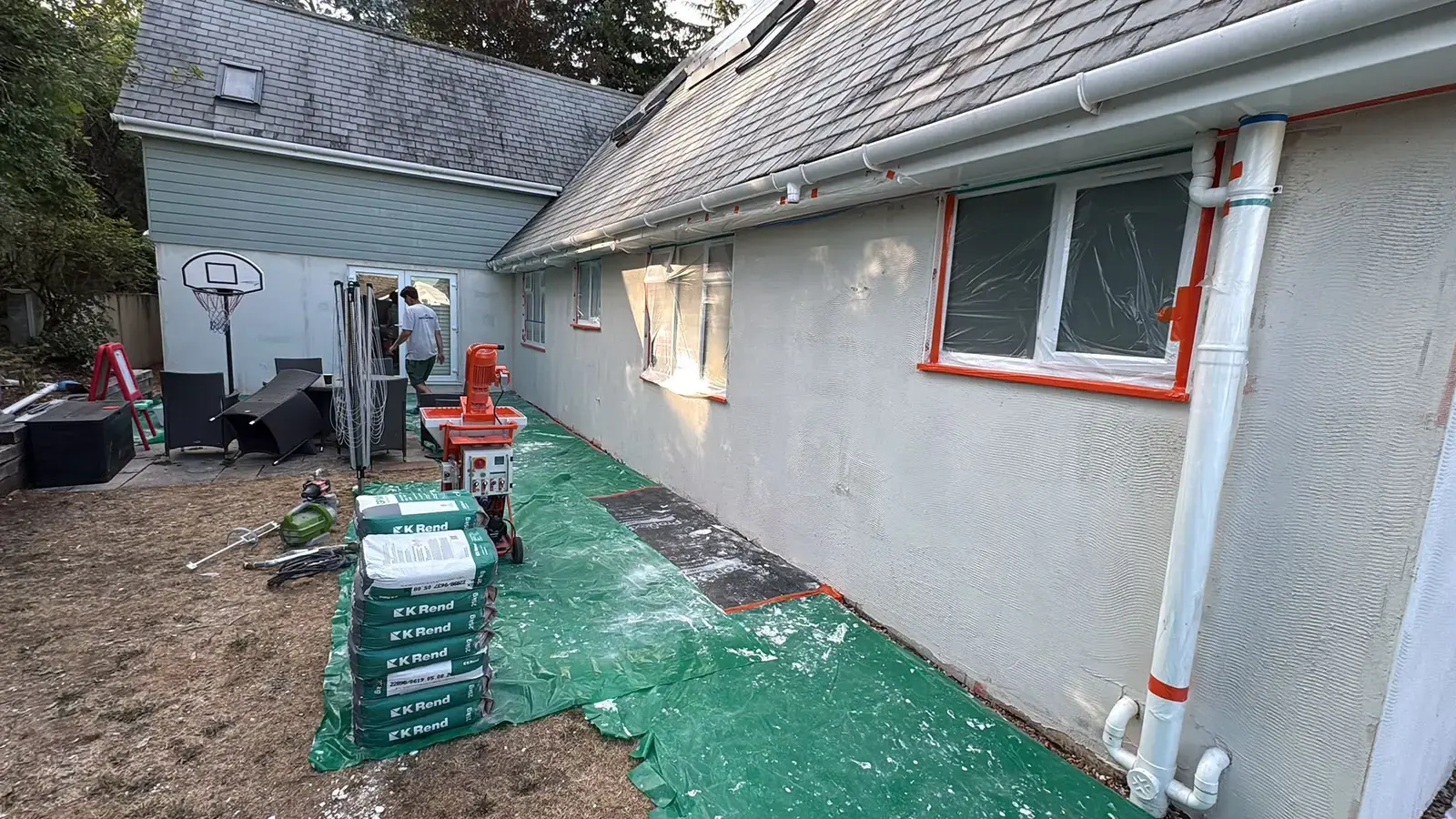
Spray-applied render. Our own team, our own machine.
Monocouche and silicone base coats go on with a render spray pump, not a hawk and trowel. The machine lays the same thickness across the whole elevation, DPC to gable apex, in one pass. That is where hand application drifts: thin at the top of a long ladder, thick where the mix was fresh. It then gets ruled off and finished by hand, so the texture is still a plasterer’s texture.
For builders this is the number that matters: a detached house that takes a hand gang a week takes our render team two to three days. Boards go up inside while the outside is being sprayed, and the same firm is answerable for both. Sand & cement is still hand applied, because it should be.
- Render team and plastering gangs run in parallel on the same plot
- Even coat thickness, fewer shrinkage cracks, manufacturer warranty intact
- K Rend and Weber systems, colour matched to the drawings
- Quoted per elevation or per plot, in writing
Before and after. Same house, a few weeks apart.
A 1930s Bournemouth house, from mesh and base coat on the scaffold to a clean white thin-coat finish over the brick.
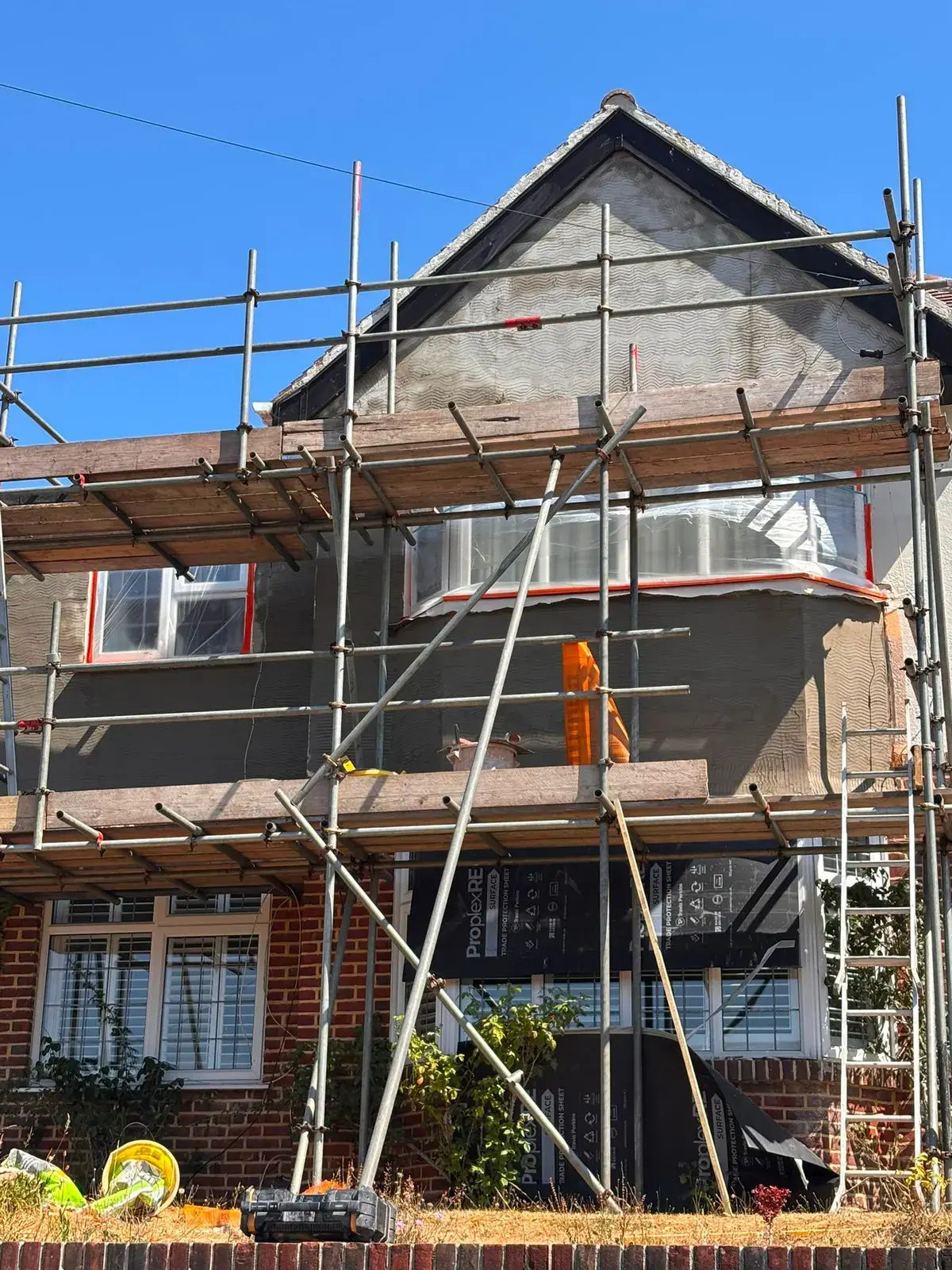 Before
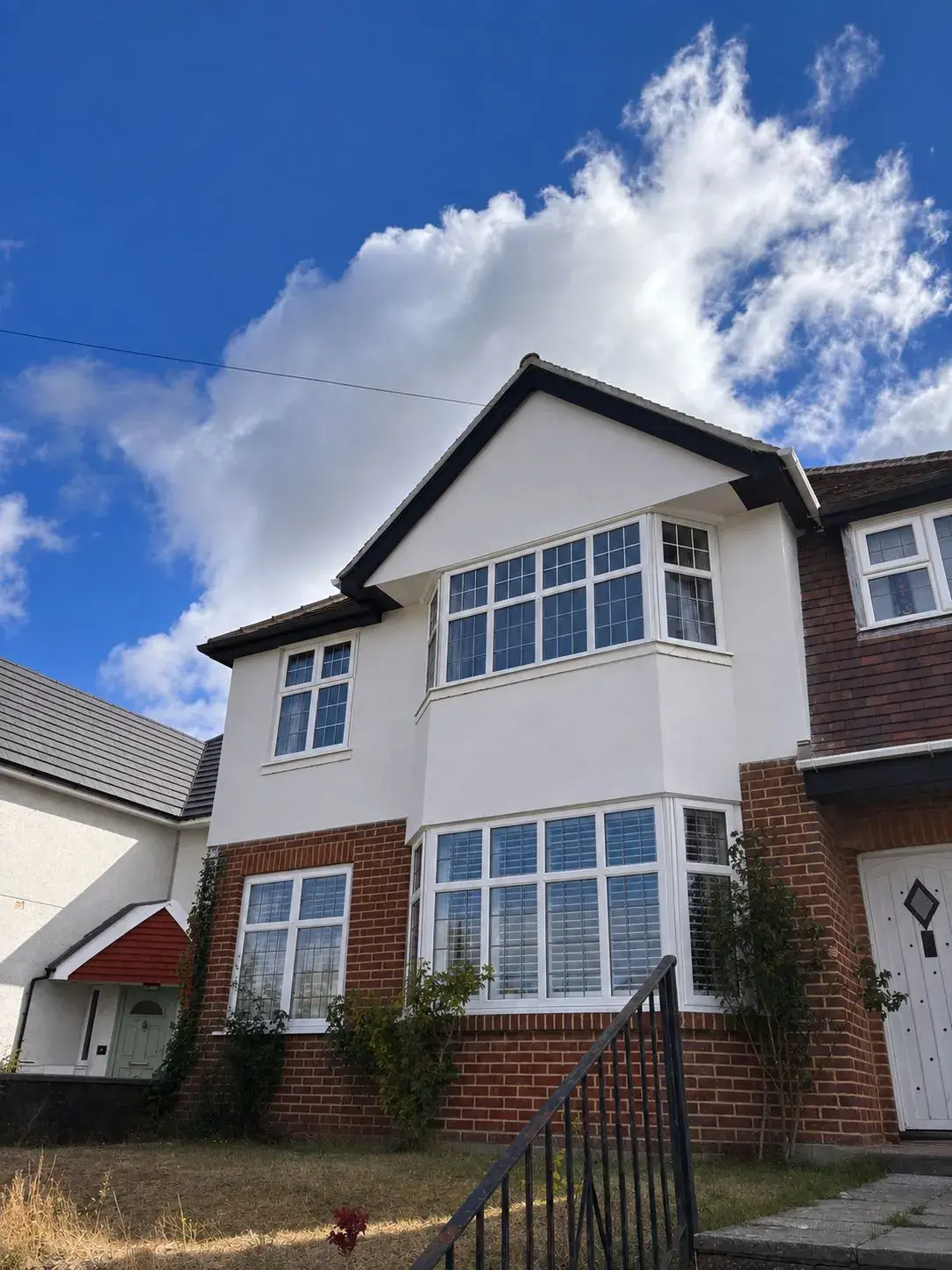 After
AfterWhich render belongs on which wall? A Dorset-specific guide.
The wrong render on the wrong wall traps moisture and cracks within five winters. The wall behind decides for you, not the budget.
Coastal exposure (Sandbanks, Canford Cliffs, Mudeford, Hengistbury Head)
Salt-laden sea air is the most aggressive weathering condition in the area. We default to silicone render over a base coat. It flexes with thermal movement, sheds water without holding it against the substrate, and shrugs off airborne salt. Sand and cement here cracks within a decade; monocouche fades unevenly on south-facing elevations.
Inland new builds (Wimborne, Broadstone, Ferndown, Verwood)
Sheltered estates with modern blockwork and cavity-wall construction. Monocouche is usually the right call: through-coloured, one-coat application, no painting required ever. Sand and cement still has a place where a builder wants a paintable surface and a more traditional look, especially on rural Dorset cottage extensions.
1970s semis being refurbed (Branksome, Parkstone, Kinson, Boscombe)
Most of these were pebble-dashed when they were built. The dash is now lifting in patches and looking dated. We strip it back, repair any damaged masonry, then render in monocouche or silicone depending on exposure. Strip-and-render specifics on our pebble dash removal page.
Period and listed properties (the New Forest, central Christchurch)
Solid-wall pre-1920s buildings need to breathe. Modern cement-based render seals moisture inside the wall and accelerates damp. We use lime renders here, or refer to a specialist if the building’s listing requires a particular spec. Never the standard sand and cement.
What render actually costs over 25 years.
Render is sold on installed price, but the number that matters is the cost across the wall’s lifespan. Sand and cement is the cheapest to install and the most expensive to live with: repaint every 5 to 10 years with masonry paint, fill hairline cracks, repair where it lifts. Over 25 years you pay for the wall three times.
Monocouche sits in the middle. No painting ever, the colour is in the product. A wash-down with a soft brush every few years keeps it clean. Lifespan 25 to 30 years on a properly prepared wall.
Silicone is the most expensive to install and the cheapest to live with. Self-cleaning on rain, flexible so it doesn’t crack on thermal movement, 25+ year warranty from K-Rend and Weber. Most of the silicone render Pearl installs in Bournemouth is on coastal properties where the wall sees driving rain three or four times a year. Full detail on our silicone rendering page.
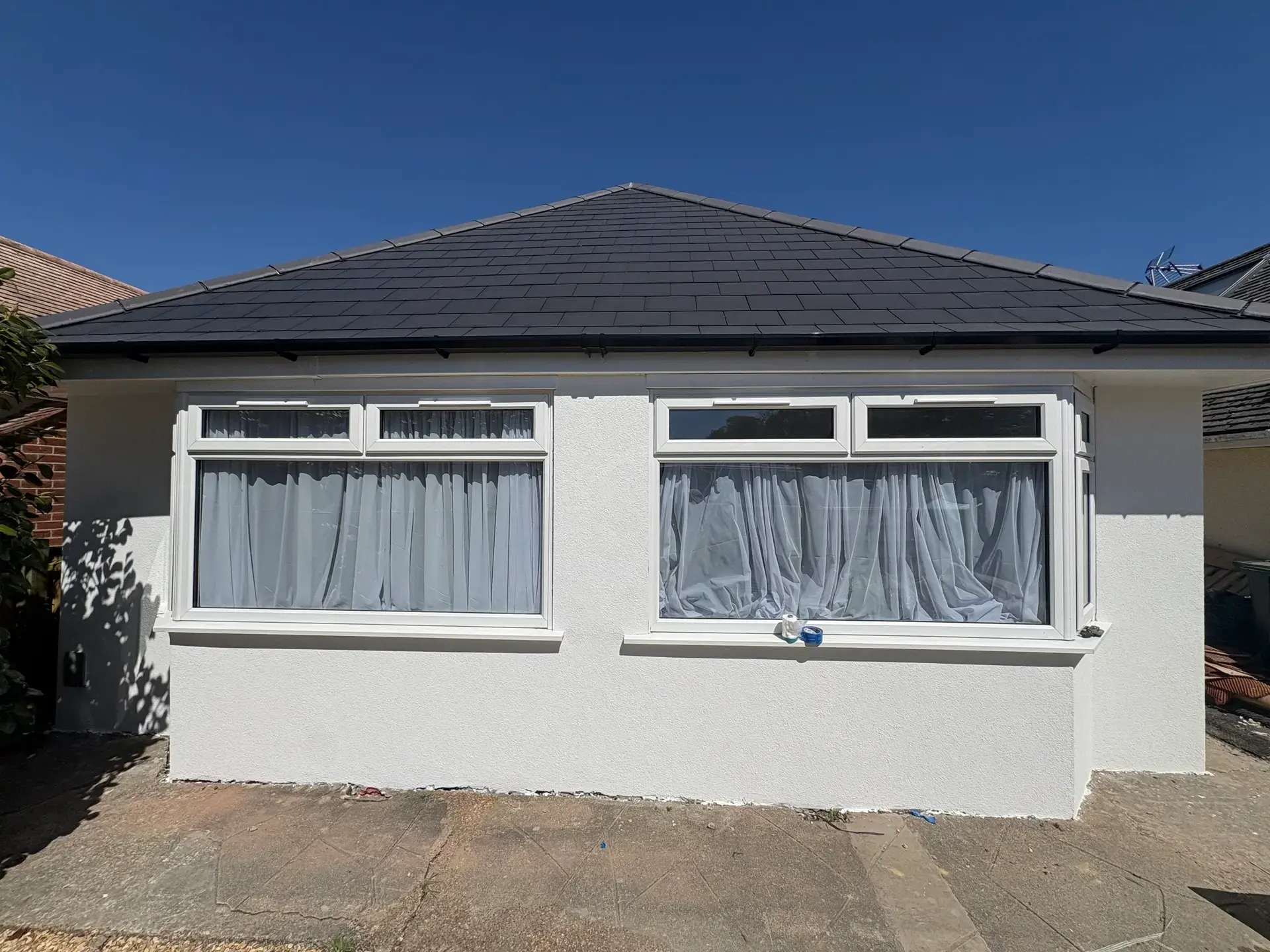
Recent render jobs, finished and in progress.
Our rendering process
- 1
Survey & Specification
We assess the existing substrate, check for damp or movement, and specify the correct render system and finish for your property.
- 2
Surface Preparation
Hack off loose or damaged render, treat damp patches, fit insect mesh and movement beads at expansion joints and window reveals.
- 3
Base Coat Application
Scratch or floating coat applied and allowed to cure. The right drying time between coats is critical for long-term performance.
- 4
Finish Coat
Monocouche and silicone go on with the spray pump for an even depth, then get ruled off and textured by hand. Sand & cement is hand applied. Joints and abutments fully sealed.
- 5
Inspection & Handover
We inspect the finished render with you, provide aftercare advice, and clear all waste from site.
Rendering FAQs
Sand & cement render lasts 20 to 30 years when properly applied and maintained with painting. Monocouche systems last 25 to 30 years with minimal maintenance. Silicone render has a 25+ year expected lifespan and is virtually maintenance-free thanks to its self-cleaning properties.
In many cases, yes. It depends on the condition of the existing render. If the existing coat is well bonded, we can apply a fresh system over the top. If there are areas of debonding, movement cracking or damp ingress, we'll recommend hacking off and starting fresh. We assess this during the initial survey.
Monocouche is applied directly to masonry in a single coat. It's faster and more affordable, and the colour is integral. Silicone render is applied as a thin top coat over a base, and offers better flexibility, weather resistance and a self-cleaning surface. Silicone is typically the better choice for cavity-wall construction or exposed locations.
Both, depending on the system and the wall. Monocouche and silicone base coats go on with our render spray pump. The machine lays an even thickness across the whole elevation in one pass, which is where hand application drifts on a big gable or a run of plots. It then gets ruled off and finished by hand, so the texture is still a plasterer’s texture. Sand and cement is hand applied. On builder programmes, spraying is the difference between an elevation taking two days and taking a week.
Sand & cement render needs masonry paint to protect it from water ingress, typically every 5 to 10 years. Monocouche and silicone renders are coloured through the product and never need painting, though they may benefit from a wash down over time to remove organic growth.
Tell us about the walls.
We’ll come back inside 24 hours with a real number on which render system suits the property and what it costs. Free, itemised, no obligation.